Walking the Prayer Labyrinth
all are welcome!
What is a labyrinth?
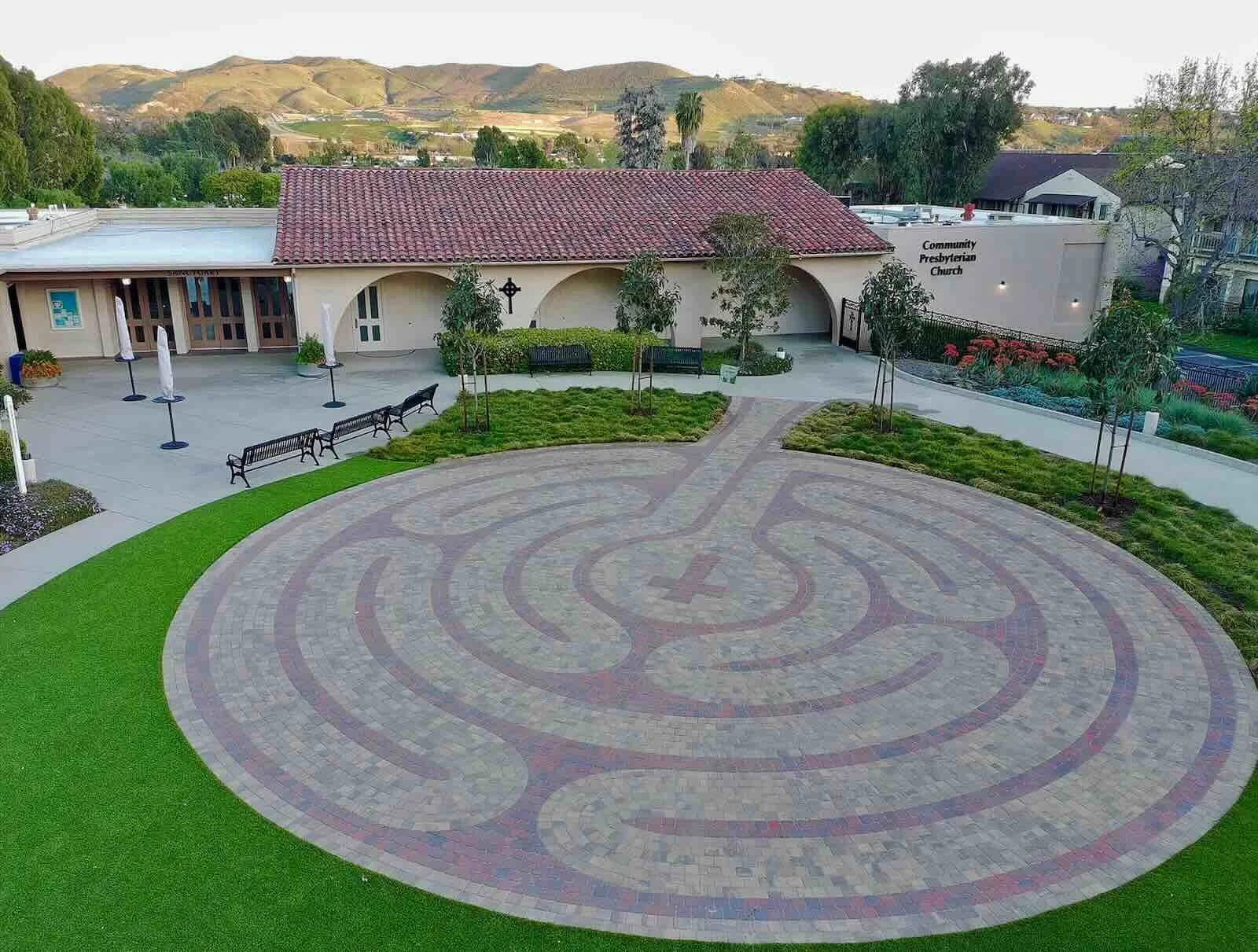
The Labyrinth is an ancient symbol, found in nearly every culture. The symbolism of the labyrinth relates to wholeness; it combines the imagery of the circle and the spiral into a meandering, but purposeful path. Many cultures have used the spiral or the labyrinth as a symbol of their search for meaning and guidance. The labyrinth represents a journey to the center and then back out again into the world. In praying the labyrinth, we encounter God and then go into the world to live as God’s people.
Walking can be a spiritual experience. Movement can be a type of prayer. For some walking is a way to do contemplation, discernment and encounter God. The labyrinth is a spiritual tool that helps us seek God by simply walking its path.
The labyrinth is ancient. In many of the Christian cathedrals labyrinths were built right into the pattern of the floor tiles.
The labyrinth is a tool. It can be a part of your spiritual practice. It holds no special powers and isn’t sacred alone. It is a tool for a sacred experience, just like music and artwork. Alone it is only an object. But put to use, like a hammer to a nail, it can achieve the purpose for which it was designed.
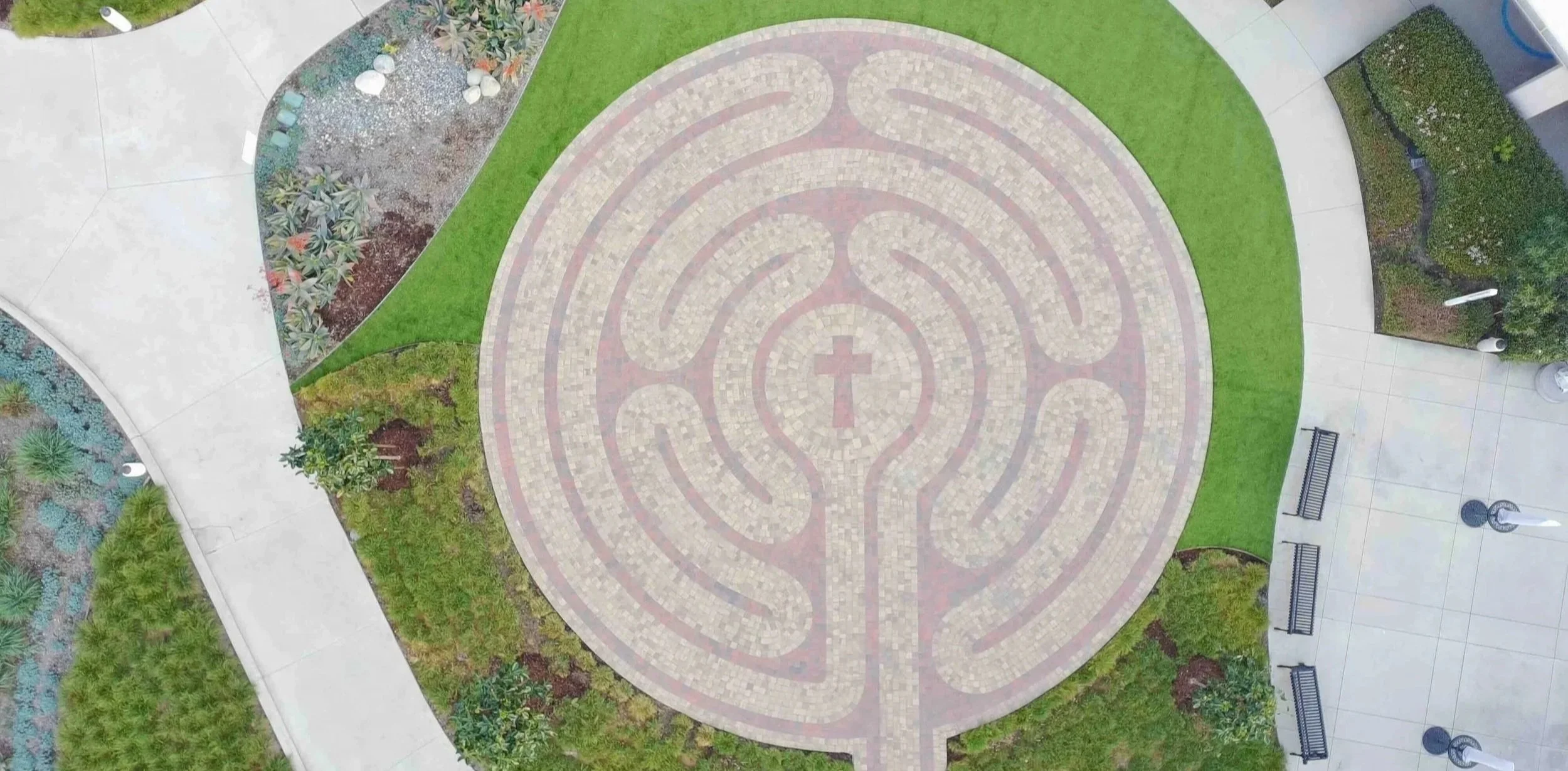
The labyrinth isn’t a maze or puzzle. There is only one path to follow. It is not intended to confuse, but to clarify. The journey towards the center is clearly marked so you can move confidently into and through the labyrinth.
The labyrinth is an opportunity. It provides the chance to be attentive to God’s presence in new and fresh ways. For many, the labyrinth is a new tool, but even for those who have experienced it before, each entry into the labyrinth can be an opportunity to encounter God in a new way. Allow the rhythms, movement and silence of walking the labyrinth to help your contemplation and nourish your imagination to life.
The labyrinth has many purposes. It is a journey that can help us get to many destinations. Christians can use the labyrinth for many purposes, including:
Prayer – instead of sitting with bowed head, simply walk and allow the prayer to happen.
Presence – allow yourself to experience the presence of the triune God
Discernment – consider a particular concern, decision, or request. The labyrinth can be the place where you seek divine wisdom and guidance.
Metaphor – reflect on your walking experience as a metaphor for something in your life
The labyrinth is without judgment. There really isn’t a “right” way to do it. While these suggestions can help guide you, they do not ensure a particular experience or outcome. Like reading scripture, each time you enter the labyrinth is a new opportunity. Let the Spirit move according to its will rather than your own. Let go of your “planned” outcome. Sometimes it will seem that nothing has happened or the experience has “gone wrong.” If that is the case, accept the outcome and explore its meaning for you. Trust that the Spirit of God has spoken even in the unexpected or confusing outcomes.
Three Suggestions for Walking and Praying the Labyrinth
Praying the labyrinth is simple. As you come to each turn, pause and pray the prayers of your heart. If you need a little help, follow this pattern:
Pray for the members of your family, one person at each pause
Pray for your friends the same way
Next pray for someone with whom you’ve had a disagreement
Now pray for those who do not have enough to eat, who have no place to live, who are sick, sad or lonely
Thank God for the things that make you happy
Ask God to help with the things that make you sad
Thank God for all your blessings
As you continue to walk, pause and listen for what God is saying to you
Another approach to walking the labyrinth…
Remember – before walking the labyrinth
Take time in gratitude, be thankful for your life. Bless the people in your life. If there is a specific event or situation troubling you, bring it to mind and form a healing question if possible.
Release – walking into the labyrinth
This is the time to quiet the mind, let go of the mind chatter and release your trouble. Open your heart to feel whatever it might feel. Become aware of your breathing. Take slow breaths. Relax and move at your own pace.
Receive – standing or sitting in the center
This is a place of reflection. Pause and stay as long as you like. Be mindful of the presence of God. Listen to that small inner voice. In the safety of the labyrinth have a heart to heart with yourself.
Return – walking out of the labyrinth
When you are ready, begin walking out the same path you followed in. Walking out, integration of your experience happens. Experience the sense of well-being, healing, excitement, peace or calm.
A third approach to praying the labyrinth is to hold a question in your mind and meditate on it while you are walking. Here are a few questions you might ask yourself as you walk…
What are you cultivating in your life this season of your life? What are you letting go of?
What is bubbling up within? To what is God inviting you?
What feelings and needs do you want to leave with God as you move forward?
Can you perceive any tension in your body? Take a deep breath and let it out slowly. What do you want to say to God now?
If you heard God’s voice saying to you, “You are my beloved child, whom I love; with you I am well pleased,” how would you respond?
What do you feel as you rest in God’s presence?
If you were to relax and trust the path you are on, what might you discover?
-
Labyrinths are found in nearly every culture. They combine the imagery of the circle and the spiral into a meandering but purposeful path
It represents a journey to the center and back out again to the world
It is not a maze, which is a puzzle to be solved
With a maze, many choices must be made and an active mind is needed to solve the problem of finding the center
A labyrinth has only one path to the center – the way in is the way out
With a labyrinth there is only one choice to be made – to enter or not
-
In the Christian tradition, the center of the labyrinth is considered the heart of God.
As you enter the labyrinth bring to mind something you want to bring to God - a concern, a question, a yearning, etc.
Bring an openness to the heart of God for your life at this particular time and place.
Walk slowly, not hurried or frantic.
If other thoughts interrupt your concern, question or yearning that you are bringing to God, acknowledge them and return to what you are laying before God. Remember that busy minds just allow us to return to God more often!
As you walk make space for God to speak even as you move towards the heart of God
Our body can also assist with a posture of openness, such placing our palms up as you walk rather than palms down or clasped or in our pockets.
-
When you arrive at the heart of God, breathe deeply of the presence of God.
Listen deeply and still interruptions by returning to what you are laying before God.
You are invited to stay as long as you desire in this space.
When you feel the time is right retrace your steps back out of the labyrinth, while giving thanks for how God has spoken to you through a new insight or a new awareness of God with us.
God is with us and the labyrinth gives us an opportunity to be intentionally attentive to God's presence.
Notice what you feel as you exit the labyrinth and give thanks for what has transpired within you, as you turned your attention to the heart of God.
Do not judge yourself if your concern, question or yearning remains unfinished, rather give thanks for this opportunity to be intentionally present to God’s presence.